


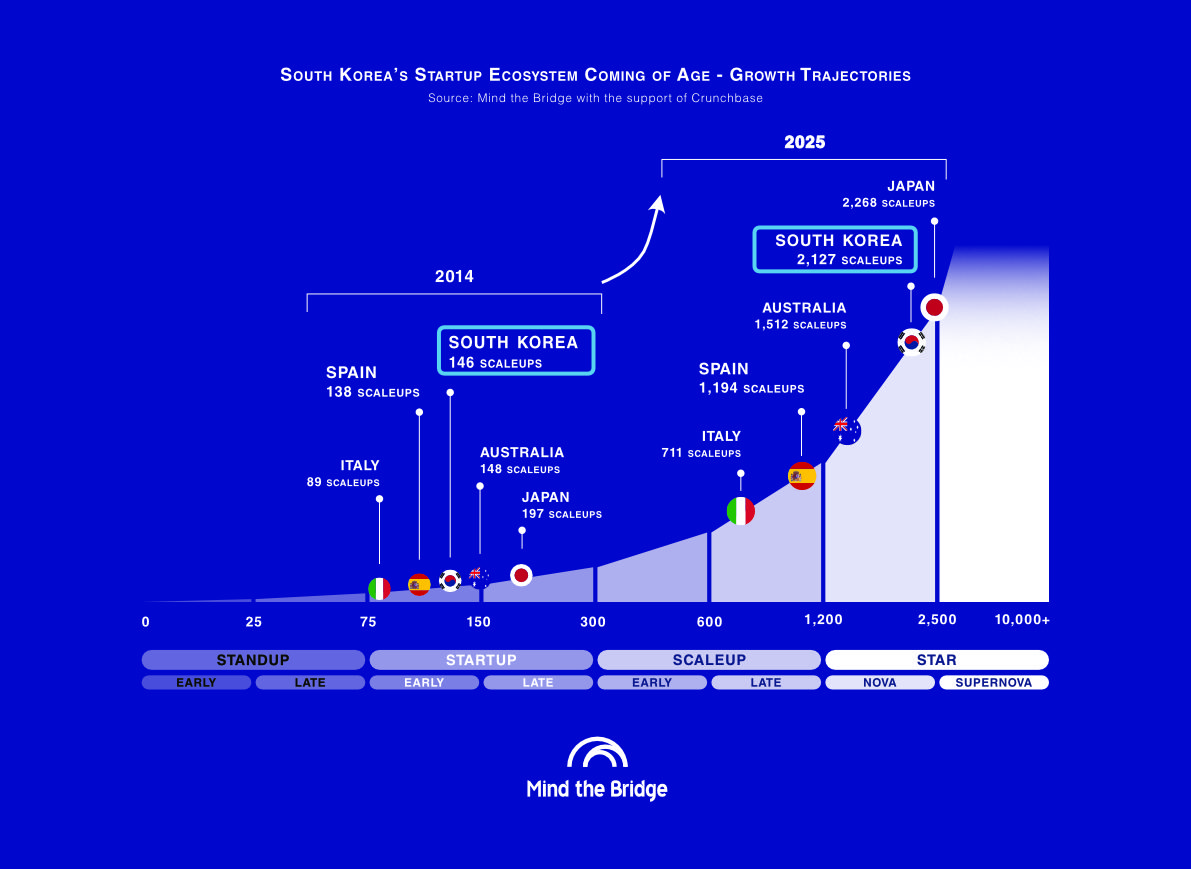
Over the past decade, South Korea has turn out to be one of the fastest growing innovation ecosystems in the world. Only 10 years ago the country had about 200 scale – today this number increased ten times to over 2,100.
What is behind the South Korean boom?
This extraordinary growth was largely powered by a strong government policy, which not only supported the creation of startups, but also introduced clear performance indicators in the field of innovation. The most visible initiative is the Global Unicorn Project, launched in 2019 by Ministry of SME and startupswhich introduced structured categories, resembling “Unicorns” and “Purchasing” inside the National Innovation Map.
These efforts helped in the positioning of Korea as the leading start -up ecosystem in Asia outside China and India.
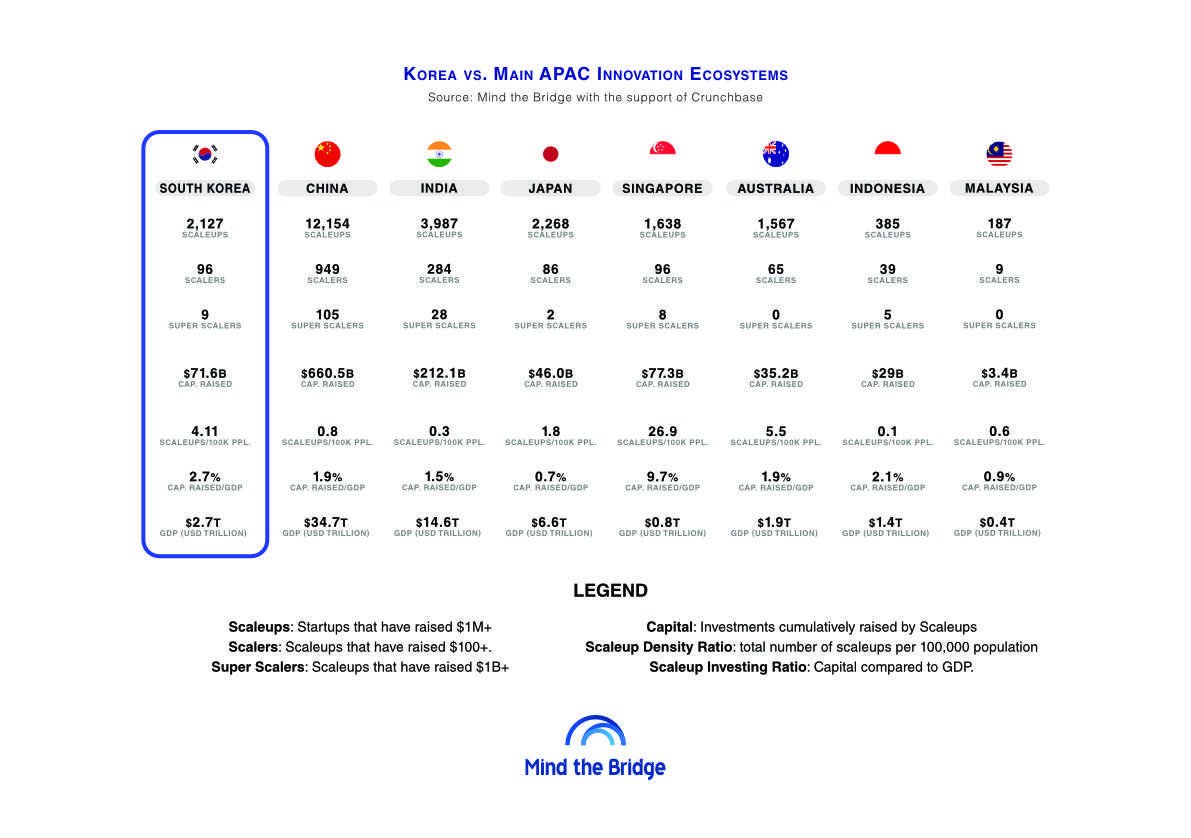
According to Technological scale South Korea 2025 Report – produced by my organization, Watch out for the bridge In combination with Crunchbase and which you’ll charge Here – Korea is on the right track to overtake Japan in the number of scale (2127 vs. 2268).
As for the capital investment, the leader has already taken over – $ 76 billion vs. $ 46 billion – marking Korea as one of the few regional progressive powers.
Catching up – and exceeding – peers
Contrast with other rapidly developing ecosystems, resembling Japan and Australia, is particularly telling.
Ten years ago, Australia had a barely larger base than Korea (281 vs. 228), while Japan had twice as much (463). Today, Korea runs Australia by 35% (2127 vs. 1580) and is almost on par with Japan (2127 vs. 268).
Not only Seul …
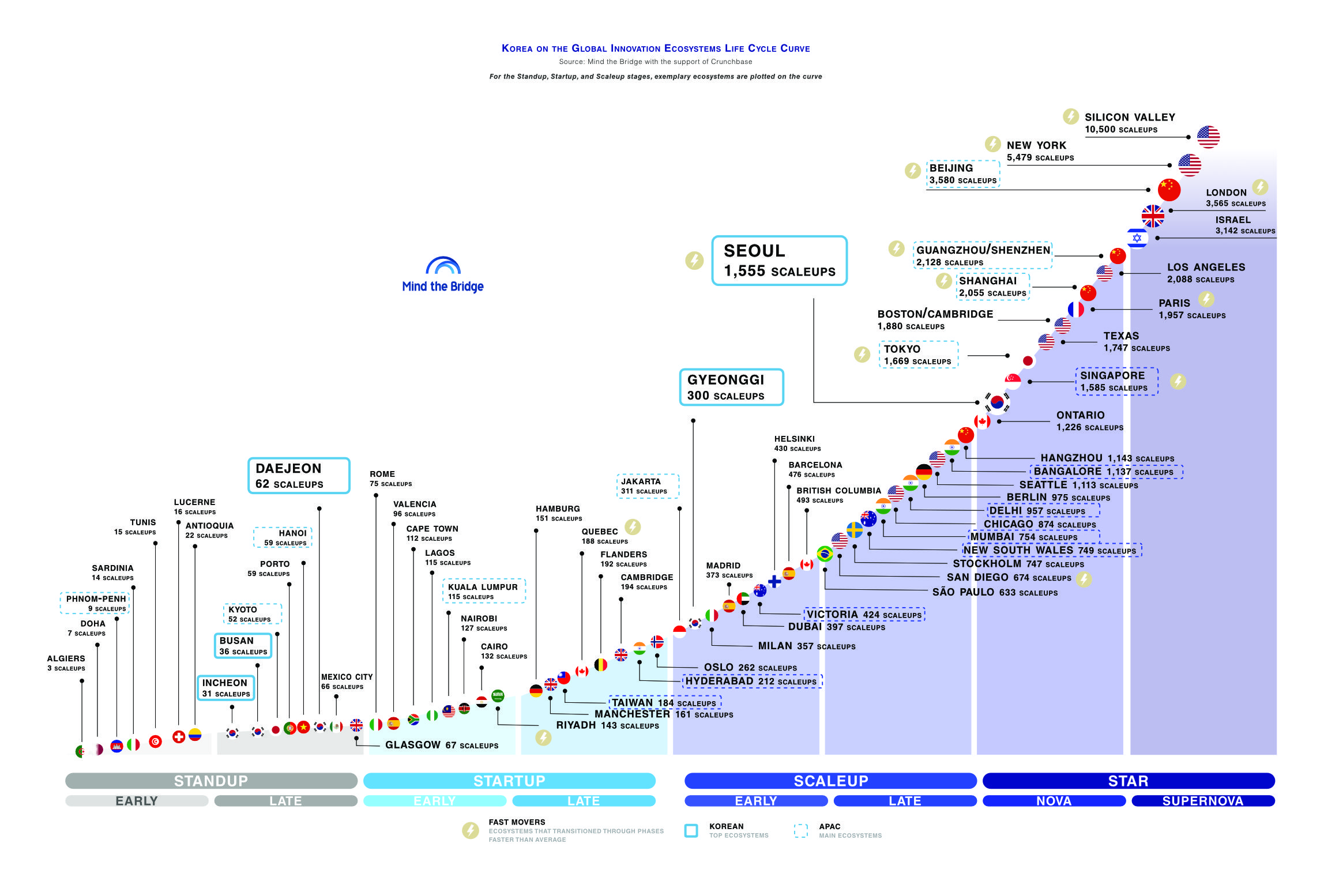
In most countries, Skalaay tends to the agglomerate around one innovation center – normally the capital – leaving regional ecosystems behind them. Korea only partly warns this trend.
While Seul still accounts for 73% of all Korean scale, this level of concentration is comparable to more mature and distributed ecosystems around the world. The Gyeonggi region already runs 14% of the scale, and other hubs, resembling Daejeon, Busan and Incheon, are developing from the phase.
This indicates a narrowing regional progressive gap, supported by future policies encouraging to be positioned growth and specialization.
A noteworthy example is the Special Research and Development Zone Program managed by Korea Innovation Foundation. Derived from the Daedeok research complex in 1973, Innopolis He transformed into a domestic scientific and technological spine, currently covering five regional zones – Daedeok, Gwangju, Daeg, Busan and Jeonbuk – and 14 Innotowns.
The center of global specialized research and development
This fast growth has not turn out to be unnoticed.
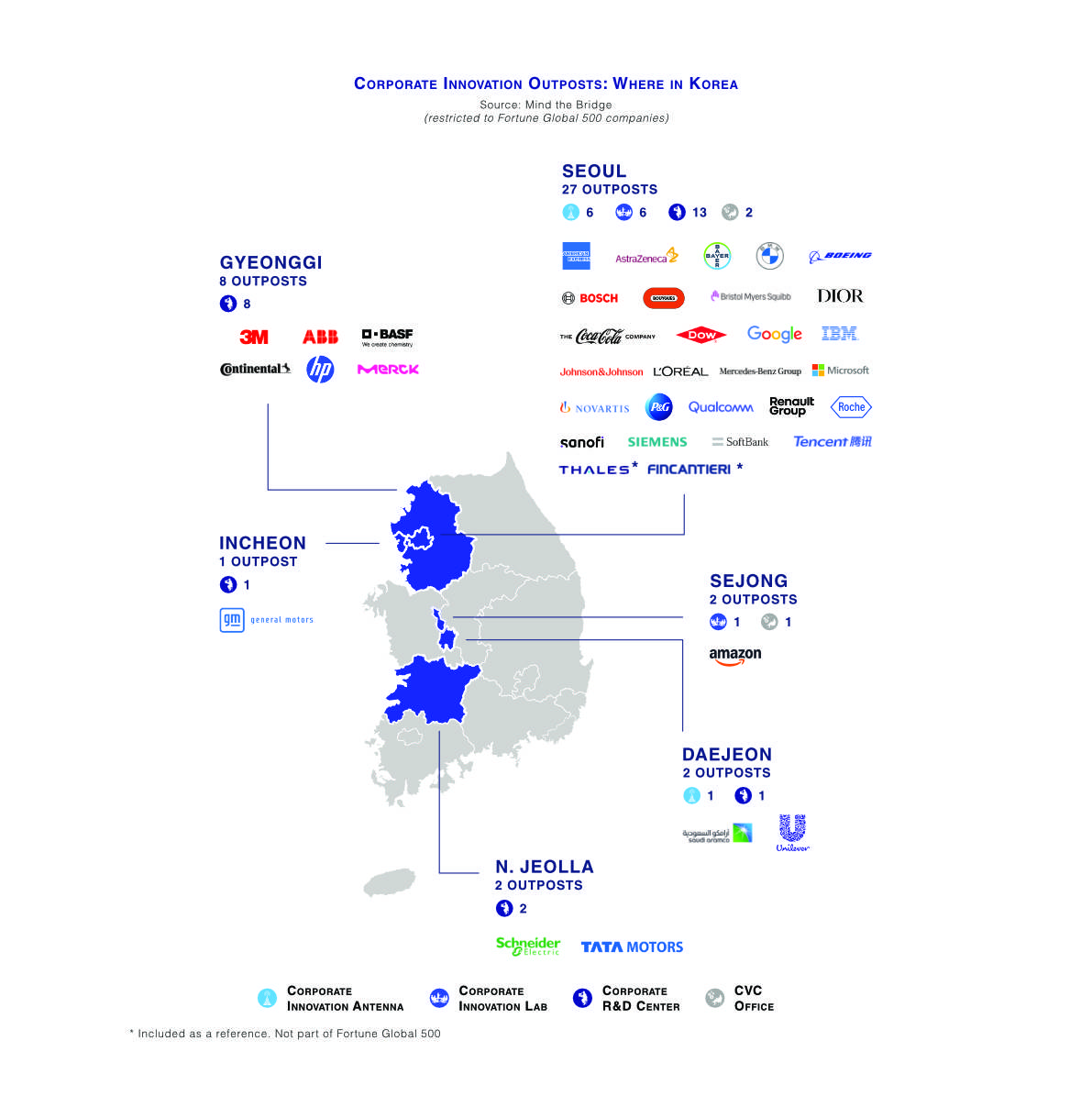
From 2025, 38 Fortune Global 500 corporations established the presence of innovations in Korea, primarily through specialized research and development centers.
Why Korea? Has a trifect:
- Live startup ecosystem;
- AND growing VC landscape; AND
- Deep specialization in Frontier technologies, resembling robotics, artificial intelligence, industrial automation and advanced production.
No wonder that industrial giants like Fincantieri – The global leader in the complex building of the shipyard – joined the ranks of global corporations placeing progressive shoes in the field in Korea.
In short
Korea not only is catching up – it becomes a global reference point for how intelligent domestic innovation strategies can ensure real economic transformation and global influence.