


After six years of working in a financial role that didn’t excite him, Mike Adair decided that life is too short so as not to passionate about his on a regular basis. “I just wanted to do something that I [loved]”Says Adair Entrepreneur. “I have never thought in a million years that it will lead me to Burritos.”
Image loan: thanks to the kindness of Red’s. Mike Adair.
Of course, it was there: today Franklin, an entrepreneur from Tennessee is the founder and general director of Frozen Burrito and Breakfast Sandwich Company Red is natural.
Adair began his entrepreneurial journey, attending the Business School in New Hampshire and remaining “very open” about what we are ahead of us. The aspiring founder was interested in creating a tangible product that may mix people, and inspiration hit one night when he enjoyed his wife Paige’s home.
Red’s, named after Adair’s rust rescue dog, was officially born in 2009.
“[I was] Running from a grocery store to a grocery store, trying to sell them and making a lot of demonstrations at night and weekends. “
Like most recent firms, Red’s met with growing pain in early production days. Adair had to find an object regulated by USDA for product production because it contained meat; It was a challenge in itself, he recalls. Then the object chosen by him went bankrupt – after 3000 Burritos from Red’s production.
“I had to [go through] Rear door and lift my chicken burritos – says Adair. “Of course, I left a check for burrito. At that moment I had a product for sale now. Then I started to agree with placing them in the radiator at the back of my station wagon, running from the food market to the food market, trying to sell them and making a lot of demonstration at night and weekends.”
Red’s landed in its first retailers, Walter Stewart market in New Canan, Connecticut, in 2010.
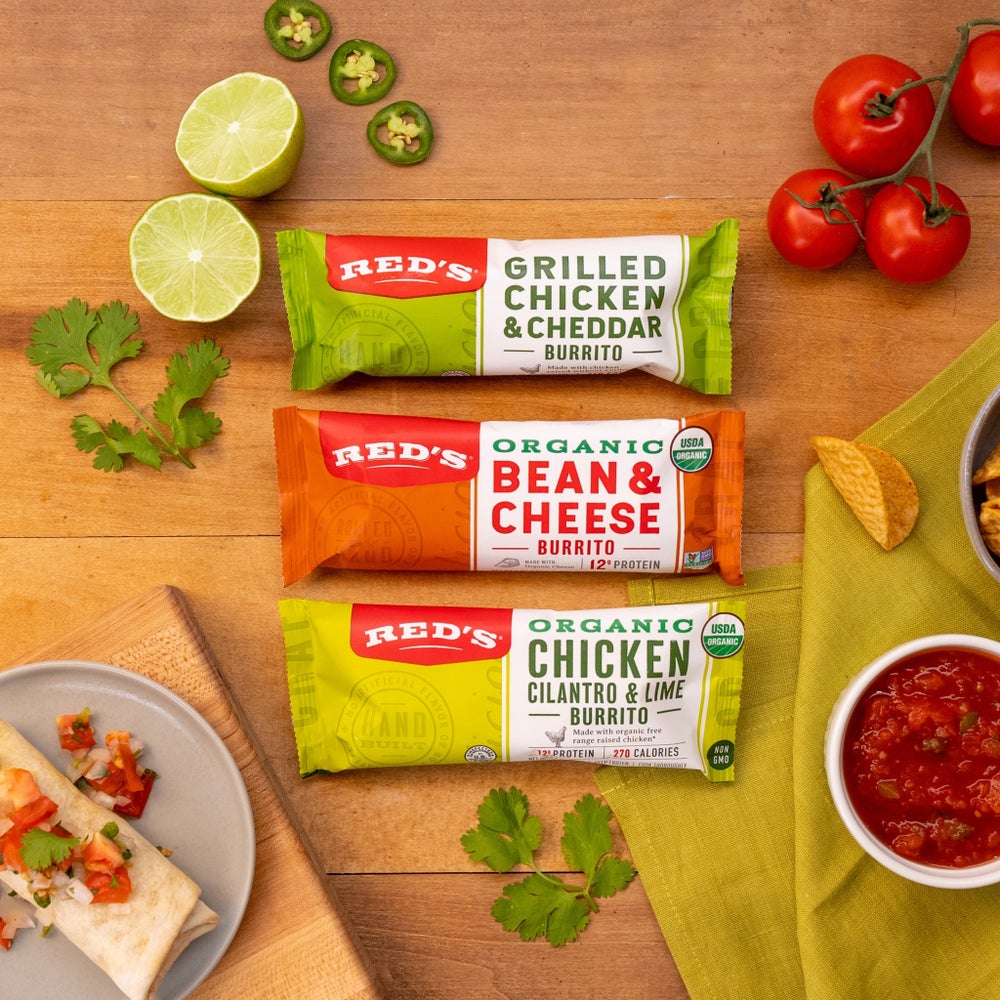 Image loan: Courtesy of Red’s
Adair says that there have been a lot of challenges – and listening to customer feedback was often the key to navigation. The founder resembles a lesson from the first brand’s offer: 11-unit Burrito (joyful ADAIR), which cost about USD 6 and was difficult to heat because of its large size. It was a “naughty awakening” when the product sat on the shelves.
People reacted well to the product’s taste profile, so the Red Outor kept intact, reducing burrito to lower the price and increase the heated comfort. This smaller burrito stays today the largest seller of the brand. Then, when customers began to ask for more, Red’s answered the phone again – from Breakfast Burritos, one other huge hit.
After the trip to the product to the predominant one was a “total disaster” – the product was quality, but no one bought – one other request of consumers appeared: can Red’s make a sandwich for a premium breakfast? The idea gave Adair stop; Red knew how to produce great burrito, but breakfast sandwiches were a recent border.
Despite some hesitation, Red’s gave him a likelihood. Finding bread that may meet the brand standards when frozen and then microwave turned out to be difficult, so the solution was a “random” super high-performance, gluten-free product-jajko with meat and cheese between two egg pancakes. Later, when the air -frikes gained grip and provided the approach to heating the bread without sacrificing such prime quality, Red’s cooperates with bakeries to implement sandwiches with a breaded breakfast.
“At the end of the day, the consumer is always right.”
The consumer response was positive, says Adair. “We have been much bad than we are right,” admits the founder – “But at the end of the day the consumer is always suitable. Our task is to create a really good product, and if they do not like it, good – we must rotate and come up with the right profiles of flavors, price points, everything that works for them.”
About seven years after the construction of Red’s Adair, it was ready to maintain one of the biggest pain points of the brand: co -creating.
Adair has never decided to make the largest Red food company in the world-“there was never enrichment”-and co-creating made it difficult to double the company’s original goal: releasing an amazing product that may have a positive impact on people’s lives and supporting the connection, says Adair.
“You want to make sure that everything and everything related to the product is done well” – explains the founder – “From all the raw materials that appear, to cook them, as they are cooled, and then, as mixed. Each piece of this end product is the highest quality product that can be.”
Red’s opened its first production plant in South Dakota in 2017.
The transfer of this production plant to the place where it is today – the production of products of the brand sold in sprouts, Albertsons, Walmart, Target, Costco and other retail sellers in the USA – made a lot of “blood, sweat and tears”, but this was the “best decision” for the company, says Adair.
Red’s has increased by 200%over the past five years, purchasing a million recent consumers over the past 12 months and is on the right track to $ 300 million total revenues in 2025, according to the company.
Bansk Group, a private investment company focusing on consumer brands, acquired a majority share In red in 2022.
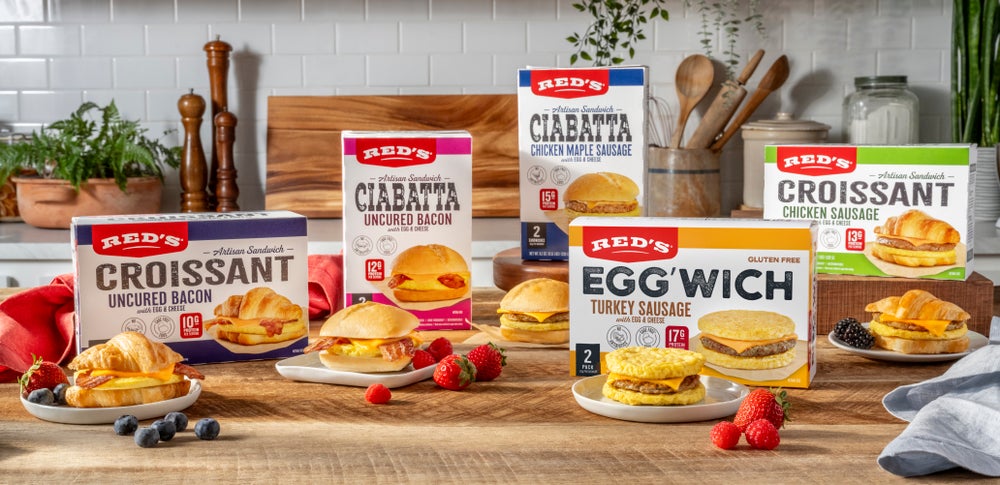 Image loan: Courtesy of Red’s
“To build a fantastic business, you really need to get involved in the process of people.”
Adair says that working with relevant retail partners – and learning from the unsuitable ones – was also crucial for some successes of Red.
“We went to some retail partners too early,” he explains, “and we didn’t manage to. Then we had to stop and wait three or four years before we could return with the right products and the assortment after we came up [what went wrong] Or he learned from our mistakes. “
Adair tells each entrepreneurs looking at the retail premiere to start with two or three smaller retail sellers who may be strong partners as the company develops. Adair says that finding a suitable product type seller that you just sell from the very starting will increase your probabilities of effective scaling.
According to Adair, employing the right people as the company grow still increases, stays mandatory.
“To build a fantastic business, you need to get involved in the process of people, how you find them, what support they need, [if you’re] Creating the right culture [and] The environment to succeed – explains the founder. “[Then it] Fixed – you begin gaining five, 10, 15 amazing people; They begin to attract other amazing people. And then a good virus spreads. “
Red’s now has about 70 employees in the corporate office team and “each of these people is so critical,” says Adair.
When Adair is considering the way forward for the company, he is excited to proceed to give consumers a thoughtful product that makes them easier for them.
“Everything we do is quite simple,” says Adair. “We do high -quality things, and then produce high -quality things, and then flash them with freezing and provide the best cooking instructions that the consumer can have an amazing experience. We want to do it really, very well, very good in the category of breakfast and snack category. And if we do it, good things.”