In recent years, the Spanish startup economy has experienced impressive growth waves – in particular in 2021 and 2022, when it overtook many European peers.
Even in turbulence from 2023, together with the wind of recession shaking global markets, Spain appeared as one of the most resistant ecosystems of the continent’s innovation.
These results are far from accidental.
As described in detail in our just issued Tech Scaleup report Spain 2025 – manufactured by Watch out for the bridge AND Crunchbase with support Work (Download HERE) – The country uses strong foundations:
- An important startup community, energized by over 15 world -class technological events each yr (especially South Summit AND Mobile World Congress), attracting a whole lot of 1000’s of participants.
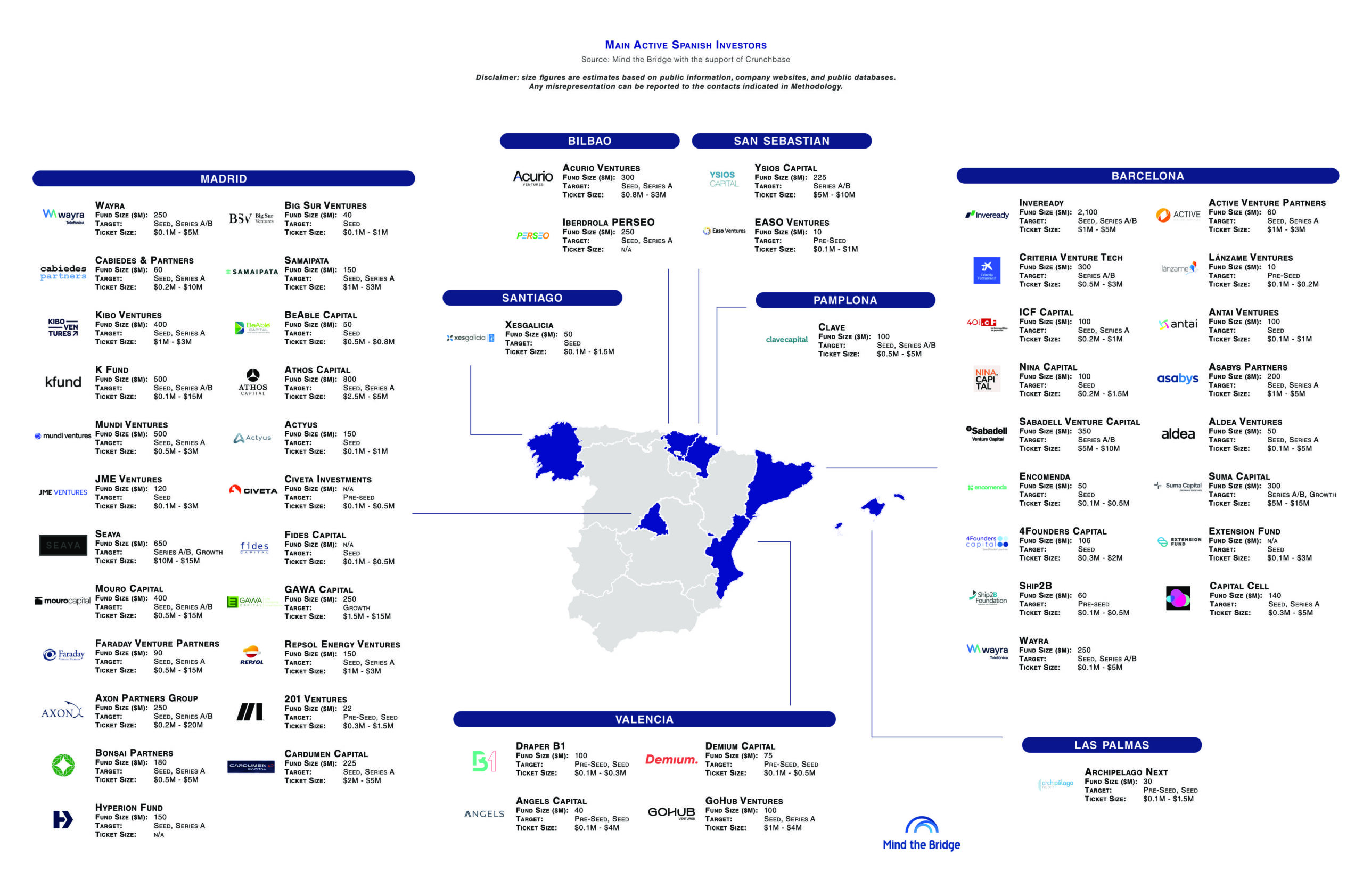
- A solid investment base of over 120 energetic investors (fully and freely available by MTB ecosystem platform).
- The growing pool of 1194 scale, which together raised the capital of $ 22.6 billion, taking Spain in fourth place in Europe.
- Deepening maturity, with 42 scalers collect over $ 100 million, and two super scalers exceed a milestone value $ 1 billion.
Growth with limits: Does Spain sustain?
Despite the strong numbers, the data encourage a more critical query: is Spain grow quickly enough to stay necessary throughout the world?
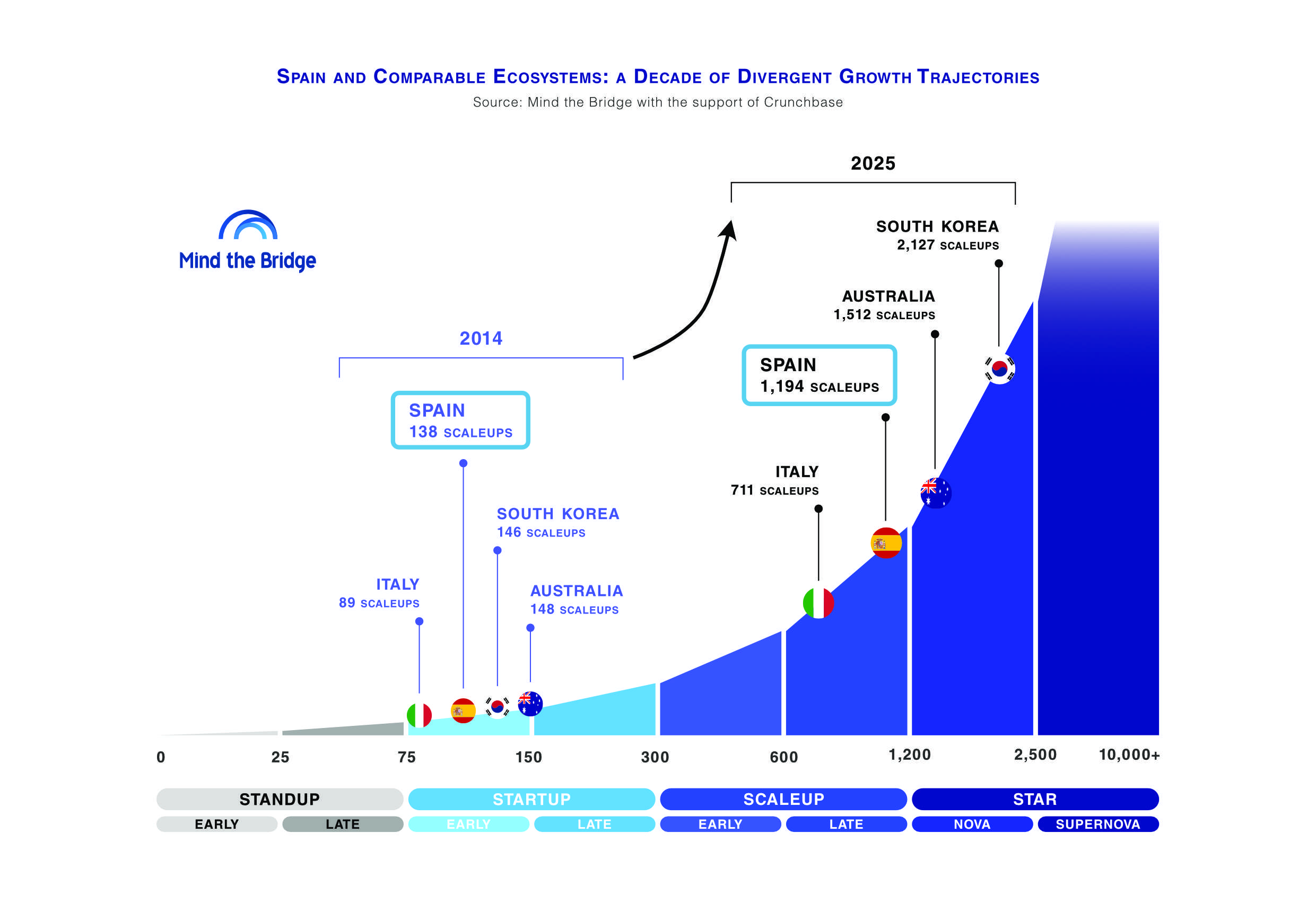
While the country overtook comparable peers, akin to Italy, it stays behind newer innovations, including South Korea and Australia.
Ten years ago, ecosystems of the scale of Spain, Italy, South Korea and Australia were more or less comparable. But today Korea has doubled the production of Spanish (2127 vs. 1194 scale), and Australia is currently almost 1.5 -scale 1 512).
Apparently, other ecosystems scale faster – often because of stronger public policy and greater access to capital. For example, the global unicorn project in South Korea is an international reference point in the acceleration of innovation in the state.
Double -core model: strength or Achilles’ heel?
Unlike most countries where revolutionary activities are focused on one urban center (Think: London, Paris or Berlin), Spain operates under a dual-core model-what we call “Duopole Scaleup” Barcelona and Madrid.
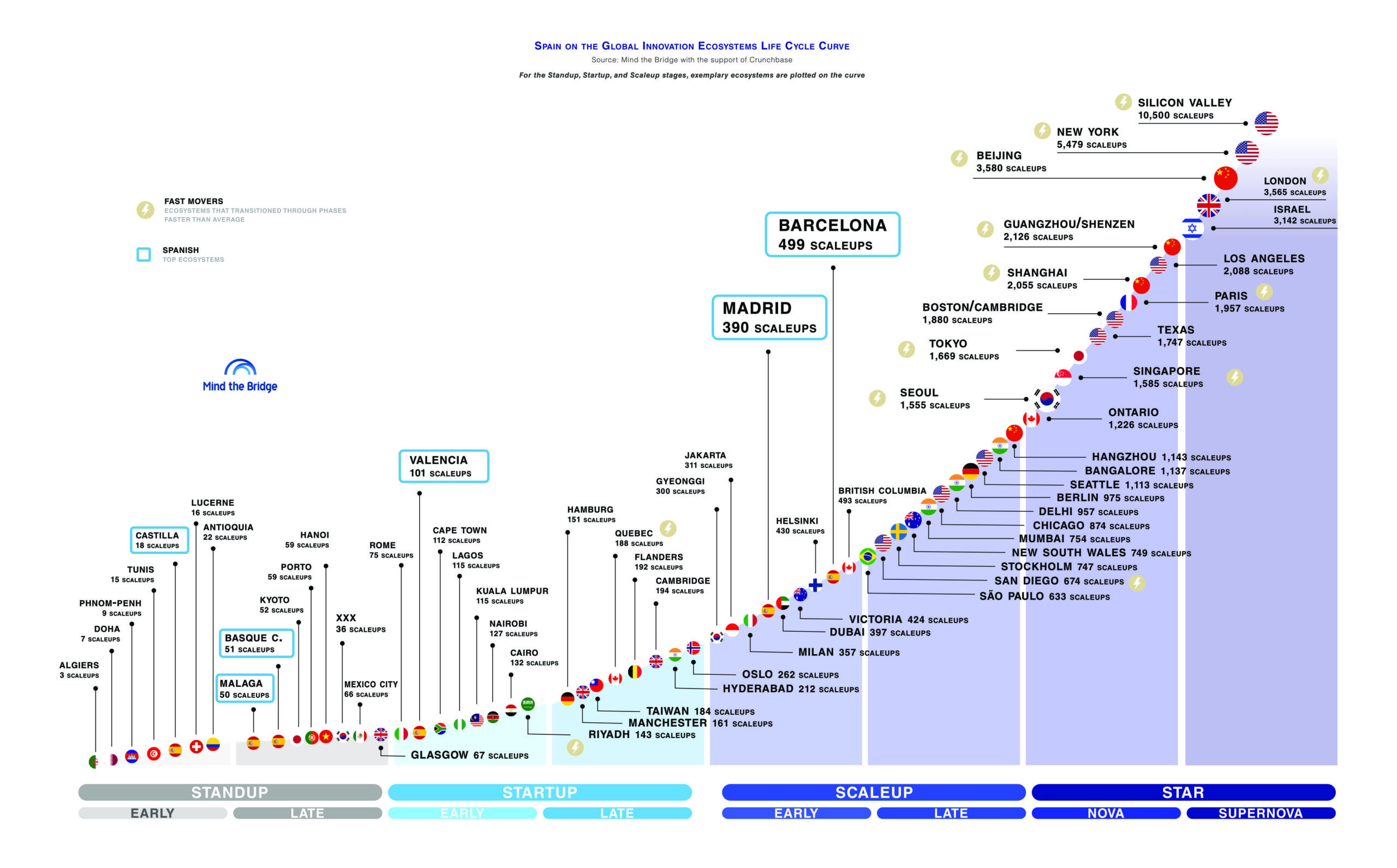
Barcelona is home to 42% of the Spanish scale and receives 47% of national financing on a scale, while Madrid is the host of about one third of the country and attracts about 39% of the investment.
This model brings each promise and danger.
On the other hand, this approach avoids excessive concentration. Unlike the ecosystems of the “winner-uu-al”, which create urban embolism, gentrification and inequality, the distributed model of Spain may offer greater economic balance and sustainable social development. It spreads the possibilities of innovation and avoids “industrial desert” in level 2 regions (although in practice all cities except Valencia still show very limited concentration on a scale).
But there is a breakthrough.
Having two strong, but separate hubs can dilute a critical mass, reducing the ability of each city to compete around the world. In fact, using our life cycle framework innovation, each Madrid (390 scale) and Barcelona (from 499) still stuck at the “early scale” stage. At their current pace, it is not expected that until the next stage until 2025.
Meanwhile, global peers move faster.
Conclusion: Time to decide on boldly
The Spanish startup economy stands at a crossroads.
His strengths – community, capital and distributed increase – are undeniable. But his model might not be enough. In a world where density, speed and global visibility are key, Spain must evolve if he hopes to stay competitive.
Unlocking the next phase of growth would require daring steps: stronger public-private alliances, a clear strategy for investing in border technologies and deeper international connections.
Proposed España Tech Alliance – modeled on France La French Tech – It may be a promising starting. But more must occur.
As we regularly talk about the bridge: in the world of innovation it evolves or became extinct.