


On this page, Hustle Spotlight questions and answers are presented by a New York friend and co -founders of Millie Blumka, 31 years old and Taylor Borenstein, 31 years old. The couple began the side Hustle in 2021 HiA brand of training accessories.
Blumka was the director of the brand’s partnership in Showfields, and Borenstein was the manager of the product implementation in Bloomberg, when they invested about USD 50,000 USD savings in the company. Since then, co -founders have developed him from a two -person operation to a lucrative business on the right track with revenues of $ 10 million in 2025, when he scaled in Amazon, DTC and B2B.
Read rigorously how they did it here.
Picture of credit: Courtesy of the Stak. Taylor Borenstein, on the left and Millie Blumka, on the right.
The answers were edited in terms of length and clarity.
When did you begin your side hustle and bustle and where did you discover inspiration for it?
Blump and Borenstein: In 2020, in 2020, we had a idea when home training became the norm, and our old yoga mats simply didn’t cut it out. We needed greater support and versatility for various trainings that we did how he carved and Pilates, and we couldn’t find a mat that might sustain. We found inspirations through our personal need and noticing many trainers on whom we looked up, they fought their mat in half to get additional support … We knew that there have to be a higher way.
What were some of the first steps you took to gather your site from the ground? How much money/investment required launch?
Blump and Borenstein: None of us arrange a company before, let alone create a product, so the first step was a lot of networks. We talked to friends of friends to try to know how the product was created. We also conducted a lot of research to know whether it was a “American” problem or other people also fought with it. Each of us has invested USD 25,000 of our own savings to repel the company and from then on investing profits.

Image loan: Courtesy of Stak
If you can return to your online business trip and change one process or approach, what would it not be and how do you regret that you’ll not do it otherwise?
Blumka: If I could come back, I’d probably establish our belts much earlier. At first, we each tried to the touch all the things and be in every aspect of the company. When we defined who the owner was, things became much smoother. Earlier roles would save us a lot of time earlier.
Borenstein: I’d probably employ customer support in advance because we spent a lot of time on the customer’s experience when we could spend the company’s construction.
As for this specific business, what you think is particularly difficult and/or surprising that individuals who enter this type of work must be prepared, but probably are not?
Borenstein: I all the time thought before organising the consumer brand How difficult can it’s if you have a good product? It seems that the product is only the first step: developing a company requires a lot of discipline, exertions, networks and efforts in all industries to actually succeed.

Image loan: Courtesy of Stak
Do you remember a specific case when something went very improper – how did you fix it?
Blumka: We used to have a whole container with wrestling and we didn’t feel comfortable, selling it. Instead, we donated mats to local organizations and used them for social events. For a moment we left us on wrestling, so we leaned on orders and processed the challenge as a marketing possibility.
How long did it take you with a coherent monthly revenues? How much did the lateral hustle and bustle earn?
Blumka: We didn’t pay until we decided that it was time to do our full -time work as a substitute of just a sidebrination.
Borenstein: It was about a yr before all the things equalized and we noticed coherent monthly revenues. For the first yr there have been good months, great months and bad months – ultimately it became more consistent and easier to predict.
What does growth and revenues appear to be now?
Blump and Borenstein: This yr, we are on the right track to earning revenues of $ 10 million – by doubleing what we did in 2024.
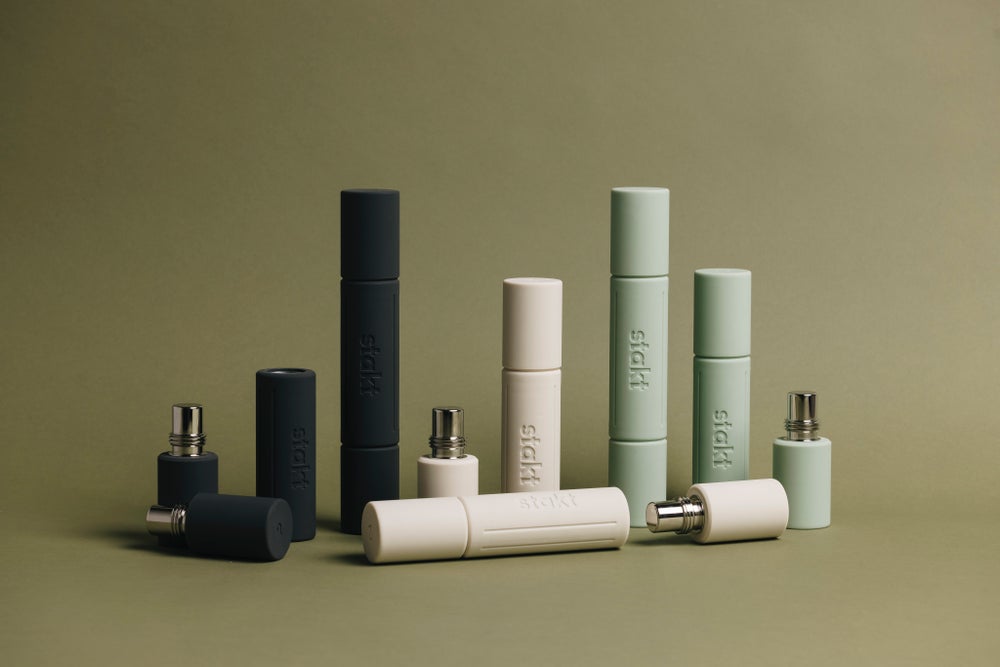
Image loan: Courtesy of Stak
What do you want best about running your organization?
Blumka: A mix of creativity and community. I like to take an idea and transform it into something that individuals really connect with. After saying, the real reward is the view of our products in the wild, and people actually use and love them. Building a community around movement and well -being was the most satisfying part. In addition, doing this next to my best friend is the biggest bonus.
Borenstein: At some point it really stopped feeling like work. Stak is an extension of me and my family and every day I can work with my best friend and husband (whom we employed last yr). I like that I can create my very own schedule, my exertions is rewarded with an increase in my very own business, I meet amazing people and I have the opportunity to design recent products and see how they arrive to life.
“Chaos is part of the journey.”
Based on the journey so far, what is your best advice for novice founders?
Blumka: There won’t ever be a perfect time, a perfect product or a perfect plan, but you have to begin somewhere. There will all the time be a reason to attend, but after launching real progress begins. This is when you may adapt, learn and develop.
Borenstein: Everyone will have advice, but trust your intestine – there is no single textbook. And keep in mind that no person invented it; Chaos is part of the journey.
On this page, Hustle Spotlight questions and answers are presented by a New York friend and co -founders of Millie Blumka, 31 years old and Taylor Borenstein, 31 years old. The couple began the side Hustle in 2021 HiA brand of training accessories.
Blumka was the director of the brand’s partnership in Showfields, and Borenstein was the manager of the product implementation in Bloomberg, when they invested about USD 50,000 USD savings in the company. Since then, co -founders have developed him from a two -person operation to a lucrative business on the right track with revenues of $ 10 million in 2025, when he scaled in Amazon, DTC and B2B.
Read rigorously how they did it here.
The rest of this text is blocked.
Join the entrepreneur+ Today for access.