


The word of the day is “self-taught” (rhymes with “grotto-pie-strike”, as in when you get hit with a pie while exploring caves).
It’s a lot of fun, is not it? I also like its meaning, which in short means “a person who goes to the library instead of taking on six figures in student loan debt before the age of 20.”
Perhaps one of the reasons I prefer it so much is that I’m self-taught myself. Much to the chagrin of my maternal grandmother (may she rest in peace), I dropped out of college to begin my first business in my early twenties.
But it isn’t all narcissism. The fundamental reason I like this word is because it has close ties to one of my favorite categories of individuals in the world: small business owners.
Entrepreneurs are legendarily fickle when it involves staying in the classroom until the bell rings. Mark Zuckerberg, who left Harvard to begin Facebook, involves mind. Businessmen, especially pioneers, have a premonition that a saying like “he who hesitates is lost” has a premonition, meaning that even if you have a great idea, there is at all times a high probability that another person will beat you to it.
To put it much more bluntly, the world won’t be sitting around twiddling its thumbs when you finish the Introduction to Western Philosophy course. You have to maneuver!
That said – and if I’ll coin my very own phrase – any entrepreneur who is not consistently learning is almost lost, even if he manages to make the leap.
Before I met my mentor, Randy Komisar, I mainly tried to follow the example of great business leaders of the past. I read avidly and still do. Between books and the school of life, I’m in classes, and I believe that whoever your characters are, the same applies to them.
#mc_embed_signup{background:#fff; false; clear: left; font: 14px Helvetica, Arial, sans serif; width: px;} /* Add your personal Mailchimp form style overrides in your site’s stylesheet or in this style block. We recommend moving this block and the preceding CSS link to the HEAD of the HTML file. */
(function($) { window.fnames = new array(); window.ftypes = new array(); fnames[0]=’EMAIL’;ftypes[0]=’e-mail’;fnames[1]=’FNAME’;ftypes[1]=’text’;fnames[2]=’LNAME’;ftypes[2]=’text’;fnames[3]=’ADDRESS’;types f[3]=’address’;fnames[4]=’PHONE’;types f[4]=’phone’;fnames[5]=’MMERGE5′;f-types[5]=’text’;}(jQuery));var $mcj = jQuery.noConfused(true);
Where to begin
New business owners don’t have much free time to browse libraries and bookstores. If you are anything like me when I started off, recommendations for books that are relatively short, stuffed with wisdom, and easy to read will likely be as welcome as an oasis in the desert.
Traveler, I have you at hand. Michael E. Gerber modified the way I see the world. This is a groundbreaking book that challenges common misconceptions about entrepreneurship and small business ownership.
Now that I have your attention, you should know that the “E-Myth” in the title refers to the Entrepreneurship Myth – the misconception that almost all businesses are began by entrepreneurs with business skills. In fact, they are often began by technicians who are expert in their craft but lack business acumen.
The book argues that the fundamental reason for small business failure is not a lack of technical skills, but reasonably a lack of knowledge of what it takes to run a business successfully.
To treatment this deficiency, Gerber introduces three distinct roles in the enterprise: the entrepreneur – or “visionary”; manager – i.e. “planner and organizer”; and technician – i.e. “contractor”.
While most small business owners work primarily as technicians, focusing on day-to-day operations reasonably than overall business strategy, Gerber emphasizes the importance of running the business, not only about it. He is a passionate advocate of making systems and processes that allow a business to operate independently of its owner.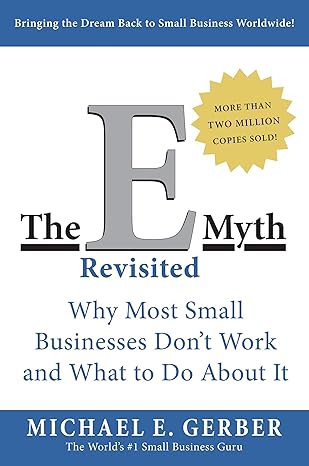
I don’t desire to spoil the entire book or bore you to tears with a dry summary of what Gerber argues so eloquently. Just say it throughout Gerber will ask you to vary your perspective from being a full-time worker of your organization to being a business owner who is consistently working on your behalf.
Yes, you heard that right: by implementing systems, documenting processes, and focusing on overall business strategy, even college dropouts can create successful, scalable businesses that are not dependent on consistently running around with a bucket in hand and putting out fires.
By adopting the Gerber approach, you may build a business that is not going to only survive, but thrive. This, in turn, could find yourself providing you with all the freedom and success you may ever dream of.
Who knows – perhaps you may even come back to that philosophy course. Judging by all those used copies of Plato in the bookstore that only have the first five pages underlined, this may be the perfect read while sipping a mojito on the beach.
The post One Book Every New Business Owner Should Read appeared first on StartupNation.