


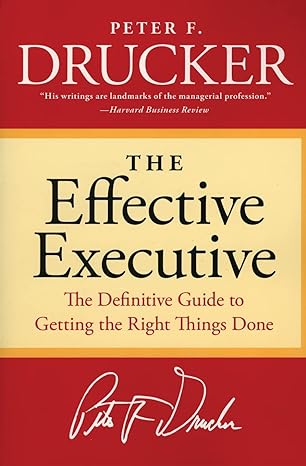
A few years ago I got here across the work of Peter Drucker and it modified the way I believed about business. As a publicist and brand strategy specialist, I have all the time perceived management through the prism of campaigns, messages and market strategies. But Drucker’s teachings weren’t just about business; they were about people, purpose and humanity.
At the time, I didn’t realize how transformative his ideas could be not only for large corporations, but also for entrepreneurs, sole proprietors and family businesses.
In today’s world, where side hustlers are the backbone of the economy and small businesses struggle to survive, Drucker’s principles seem more relevant than ever. What if leadership were an art form? What if we ran our corporations based on creativity and vision, reasonably than relying solely on metrics and frameworks?
Leadership as a creative act: Reimagining the system
Drucker believed that management is not only a set of processes or systems, but primarily human activity. His core philosophy centered around human dignity and the belief that “management is about people.” In a world dominated by constant disruption, from artificial intelligence automation to ever-changing customer expectations, Drucker’s wisdom is a timely reminder that leadership must focus on people, not only products and profits.
What if we could go even further? What if, as a substitute of focusing solely on spreadsheets and analyses, we began treating leadership and management as creative acts, something that will be visualized, sketched and built with imagination and empathy? What if leadership was something we designed, not only executed?
The truth is that today’s corporations, especially small and dynamic ones, are already implementing these ideas without even realizing it. The most successful startups, side hustles, and family businesses have embraced Drucker’s principles, applying them in creative and practical ways.
Creativity Meets Business: How Today’s Innovators Live Drucker’s Principles
Apple is a perfect example of this approach. While all of us know Apple for its groundbreaking technology, most individuals miss its deep commitment to user experience and designing experiences that resonate emotionally with customers, not only selling products. Steve Jobs, although he rarely quoted Drucker, lived by his principle that “the purpose of business is to create a customer.” At Apple, user-centered design and considering drive innovation, creating a lasting connection between the brand and its customers. For small business owners and entrepreneurs, this could function a model for building a brand that appeals to customers beyond just the transaction itself.
Jeff Bezos and Amazon have taken Drucker’s customer approach to a different level. Bezos’ focus on obsession with customer experience, decentralization of decision-making, and constant experimentation suits perfectly with Drucker’s belief that “results are achieved outside the organization” with the customer, and that internal effectiveness means little without external influence. For small business owners, this concept is key: understanding that the customer experience must all the time come first, even if it means disrupting the established order.
IDEO, a global design consulting firm, is one other great example of putting Drucker’s principles into practice. Known for its human-centered design and ability to innovate through the use of ambiguity and prototyping, IDEO has built an entire industry on the concept of creative uncertainty management. Their approach, based on collaboration, interdisciplinary considering and iterative development, is exactly what Drucker would recommend to small businesses trying to grow and thrive in a dynamic, unpredictable marketplace.
While these examples are often associated with large organizations, the principles Drucker defends will be equally relevant to entrepreneurs, sole proprietors, and small business owners. The truth is… Drucker’s focus on creativity, innovation, and human-centered leadership might help small businesses compete and grow in ways in which go far beyond the old metrics of efficiency and productivity.
The way forward for leadership: a call to motion for entrepreneurs
But how can we apply these lessons today as small business owners? How can we take Drucker’s philosophy, which was so focused on people, purpose and creativity, and put it into practice in our own corporations?
One of Drucker’s best achievements was the understanding that management is not only a science, it is also an art. And for entrepreneurs and small business owners, this could not be more vital. Management is not only about control; it’s about empowering people to do their best work. It’s about empowering employees, partners and customers to assist shape the way forward for what you are promoting.
For side hustlers and family businesses, this implies fostering a work environment where innovation thrives, where creativity and exploration are encouraged reasonably than rigid planning. It’s about accepting ambiguity, prototyping latest ideas, and finding ways to quickly adapt when things don’t go as planned. This does not imply abandoning structure, it means finding a balance between structure and creative freedom.
At the heart of this approach is the understanding that leadership is not about dictating orders or controlling outcomes. It’s about inspiring people, nurturing ideas and fostering a sense of purpose that drives all the pieces you do. Whether you are running a small startup or growing a family business, Drucker’s belief that management is a living, evolving art form should shape the way you think about leadership.
A brand new era of leadership
We live in times that require more than executions. In today’s volatile, uncertain, complex and ambiguous (VUCA) world, it is now not enough to ask, “How can we do this better?” Instead, we must ask ourselves, “What should we be doing anyway?” Drucker would insist on this.
Here’s the most vital part: small businesses and entrepreneurs are uniquely positioned to guide this task. You don’t need a huge budget or a huge team to innovate. You just need the willingness to make use of your creativity, experiment with latest ideas and the ability to adapt. By reimagining management as a creative and human-led activity, small businesses can lead the way in shaping the way forward for leadership.
So the real query is: How do we sketch the way forward for leadership before it sketches us? Perhaps it is time for all of us—entrepreneurs, small business owners, side hustlers, and family businesses—to select up a pencil and start designing leadership for a latest era. Leadership that prioritizes creativity, purpose and people. Leadership that builds corporations not only for profit, but also for impact. And possibly, just possibly, it is time to take a leaf out of Drucker’s playbook and rethink the way we lead.
After all, if we do not start sketching now, we could possibly be running a business that is more “abstract art” than “masterpiece”!
Verizon Digital Ready for Small Business
Find free courses, mentoring, networking and grants designed specifically for small businesses.

Join for free
The post Why the World Needs Peter Drucker Now More than Ever Before appeared first on StartupNation.